

00:00
Of all the days on the church calendar, Easter demands the boldest singing. Not hushed reflection; that was Friday. Sunday is for declaration. “We Sing Alleluia (Christ the Lord)” is a Hymns Reborn version of Charles Wesley’s beloved “Christ the Lord Is Risen Today,” featuring an entirely new melody for the classic lyrics. Uptempo at 118 BPM and in the comfortable congregational key of Bb, this arrangement gives your church a fresh way to launch into the greatest celebration of the Christian year.
Hymn History: Christ the Lord Is Risen Today
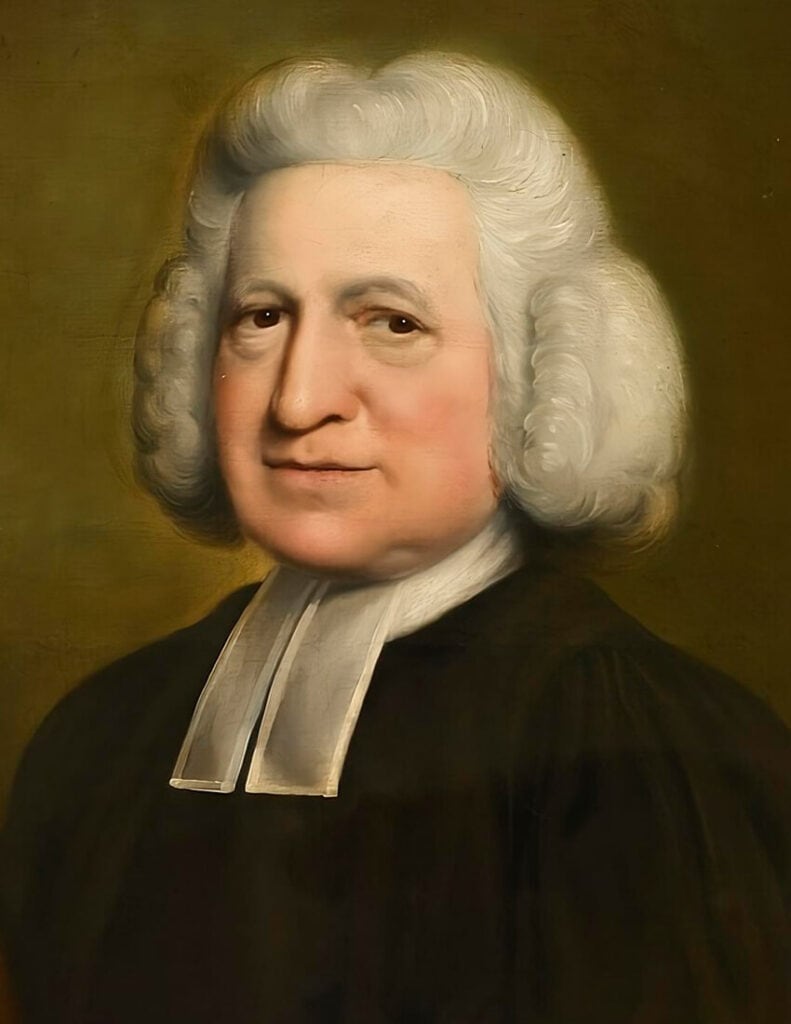
Charles Wesley is often overshadowed by his older brother John, who is remembered as the founder of the Methodist church. But while John was the organizer, Charles was the poet. And what a poet he was, with over 6,500 hymns flowing from his pen during his lifetime, making him one of the most prolific hymn writers in history. Yet in 1738, the hymns had not yet begun. Charles was still searching.
The Wesley brothers had both traveled to the colony of Georgia as missionaries, and both returned to England feeling like failures. Charles was restless, uncertain of his faith, longing for the assurance of salvation that seemed to come so naturally to others. Then, on May 21, 1738, that assurance arrived. Charles experienced a profound conversion, one that set his pen ablaze and never let it cool.
One year later, in 1739, the brothers acquired an abandoned iron foundry in London and transformed it into the first Methodist chapel: the Foundry Meeting House. For its inaugural service, held on Easter Sunday, Charles wrote a hymn he titled “Hymn for Easter Day.” It was eleven stanzas of pure resurrection triumph, each line a declaration that the grave could not hold the Son of God.
Interestingly, the hymn did not originally include the repeated “Alleluia” we now associate so closely with it. Those were added later by an unknown editor, likely to fit the hymn to a popular tune known as EASTER HYMN from a 1708 collection called Lyra Davidica. But the addition was fitting. “Alleluia,” meaning “Praise the Lord,” had been the church’s Easter cry for centuries, and its repeated presence throughout Wesley’s words gave each line the feel of a heavenly exclamation point.
Of all Charles Wesley’s thousands of hymns, including “Hark! The Herald Angels Sing” and “O For a Thousand Tongues to Sing,” “Christ the Lord Is Risen Today” holds a special place as perhaps the most sung Easter hymn in the English-speaking world. Its opening line is not a question. It is not a hope. It is an announcement: Christ the Lord is risen today!
Call to Worship
Need help finding the right words to introduce a hymn? Use this sample call to worship as a starting point, or let it inspire you to create a heartfelt invitation to praise in your own words!
Option 1: The Foundry
Nearly three hundred years ago, on Easter Sunday in a converted iron foundry in London, a group of early Methodists sang a brand-new hymn for the very first time. Charles Wesley had written it for that exact moment, the first worship service in their first chapel. And the opening line left no room for doubt: Christ the Lord is risen today.
That line wasn’t a question. It wasn’t a hope. It was a declaration, the kind that changes everything. And it still changes everything today.
As we sing these words together, we join our voices with centuries of believers who have proclaimed this same truth. The words are timeless, but today we sing them to a new melody, and sometimes a fresh sound opens our ears to hear familiar words as if for the first time. Christ has conquered the grave. Death could not hold Him. And because He lives, we have every reason to sing.
Option 2: The Taunt
The apostle Paul once posed two bold questions to the church in Corinth: “Where, O death, is your victory? Where, O death, is your sting?” He wasn’t looking for answers. He was making a point. Death had lost. The grave was empty. The battle was over.
Charles Wesley borrowed that same confidence when he wrote the words we’re about to sing: “Lives again our glorious King; where, O death, is now thy sting?” Believers have been singing these words for nearly three centuries, and they haven’t lost an ounce of their power. Today we pair them with a new melody, because words this bold deserve to be heard with fresh ears and sung with renewed passion.
Let us sing with that same confidence Paul and Wesley carried. Not because life is easy, but because the One who conquered death is alive and with us right now.
Lead with Confidence
I’m continually trying to rearrange hymns to fit the more streamlined modern worship style, and “Christ the Lord Is Risen Today” is nearly impossible to retrofit! The long “Alleluia” melisma basically disqualifies it from the start, and the melody itself requires so many chord changes that it just doesn’t sit well in a contemporary set. So I rewrote the music entirely, and this melody launches upward on that opening line, Christ the Lord is risen today, giving the lyrics a sense of lift that draws the congregation right in.
Wesley’s third verse has become the modern worship bridge, and it’s my favorite moment of the whole song:
Love’s redeeming work is done
Fought the fight the battle won
Death in vain forbids Him rise
Christ has opened Paradise
The bridge repeats to build intensity, so lean into it! Let your band swell. When I hear that soaring string pad come in, I envision millions of saints worshipping Jesus for His triumph over death.
At 118 BPM, this arrangement moves. And don’t we need more uptempo worship songs these days? This one brings energy without sacrificing depth, making it a strong opener for your Easter service.
One more thing: if your congregation falls in love with this song, you can sing it beyond Easter by simply swapping the first line from “Christ the Lord is risen today” to “Christ the Lord is crowned today.”
Blending Suggestions
Try using We Sing Alleluia (Christ the Lord) in your worship set with these songs that fit thematically:
Graves Into Gardens by Elevation Worship (Brandon Lake): Both songs celebrate God’s power to bring life from death. Where Wesley declares “Death in vain forbids Him rise, Christ has opened Paradise,” Graves Into Gardens proclaims a God who turns the impossible into abundance. Place “Graves Into Gardens” later in your set as a response to the resurrection declaration, moving from what Christ accomplished at the tomb to what He continues to do in our lives today.
Living Hope by Phil Wickham: This modern anthem walks through the narrative of the cross and empty tomb with vivid detail and deep reverence. It makes a natural companion to “We Sing Alleluia (Christ the Lord)” because both songs build toward the same climax: the risen Christ. Try transitioning from Wesley’s bridge, “Christ has opened Paradise,” into the chorus of “Living Hope” for a powerful thematic connection.
O Praise the Name (Anastasis) by Hillsong Worship: “Anastasis” is the Greek word for resurrection, and this song takes your congregation on a journey from the cross to the grave to the risen King. Where Wesley is bold and declarative, “O Praise the Name” is reverent and awe-struck. Together, they give your congregation space to both celebrate and meditate on the resurrection.
King of Kings by Hillsong Worship: This song traces the story of Christ from His birth through His death and resurrection, landing on the declaration that He is King of Kings. Following “We Sing Alleluia (Christ the Lord)” with “King of Kings” allows you to move from the event of the resurrection to the ongoing reign of the risen Christ. The transition from Wesley’s triumphant “Soar we now where Christ has led” into the worshipful storytelling of “King of Kings” creates a seamless Easter set that is both joyful and grounding.
By weaving “We Sing Alleluia (Christ the Lord)” with these contemporary songs, you’ll build an Easter worship set that honors the centuries-old declaration of Christ’s victory while speaking the musical language your congregation knows and loves. And with a melody this fresh and lyrics this powerful, don’t be surprised if your church wants to keep singing it long past Easter Sunday.