
00:00
Few hymns are as instantly recognizable as “Amazing Grace.” It rings out in packed sanctuaries, comforts in graveside services, and somehow finds its way into the mouths of people who couldn’t name another hymn if you paid them! The story behind it is every bit as remarkable as the song: a slave trader who openly mocked God, undone by grace he never could have earned. Let’s look at how this beloved hymn can crack hearts wide open in your worship gathering.
Hymn History: Amazing Grace
“Amazing grace, how sweet the sound, that saved a wretch like me.” The man who penned those words did not choose them lightly, and his life proves that no one is ever beyond God’s reach.
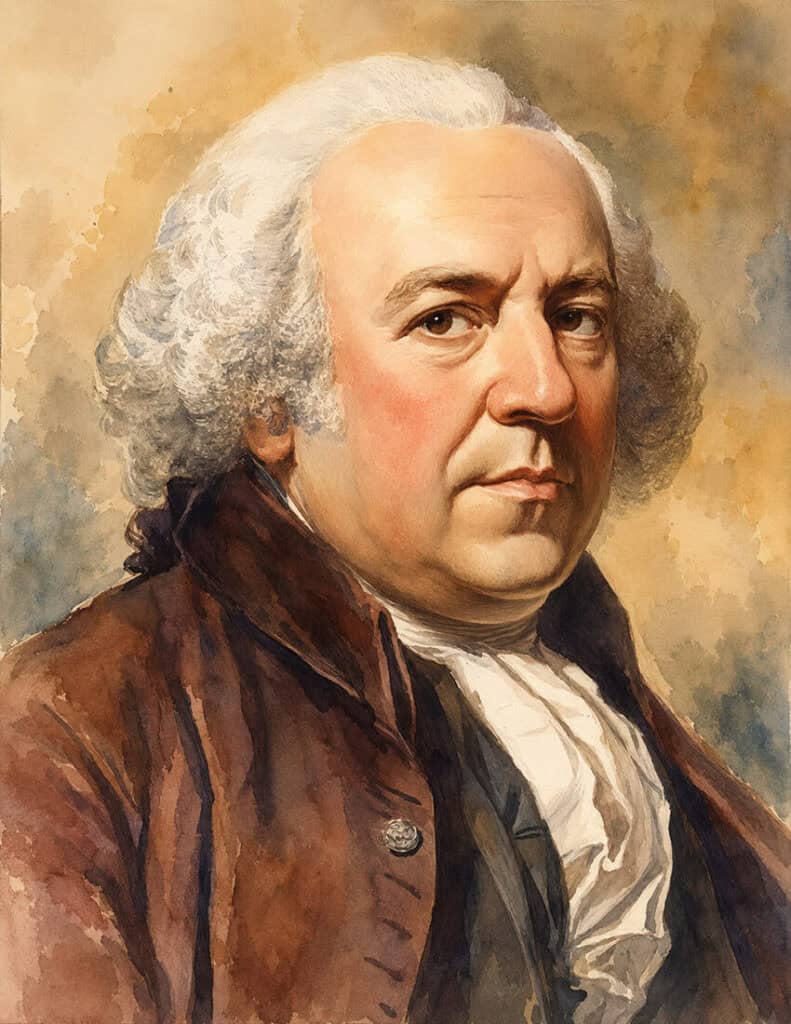
John Newton spent his early years as a slave trader, and he made a sport of ridiculing religion. He thought himself untouchable, well past any need for God. Then came a storm. In 1748, on a sea Newton knew far too well after years in the British navy and the slave trade, a violent gale brought the proud sailor to his knees, begging the very God he loved to scorn for rescue. The mercy came in a chilling way: another crewman took Newton’s place on deck, and minutes later a wave swept that man to his death. Everyone else, Newton included, survived.
That night planted a seed, though it took years to sprout. Newton stayed in the slave trade for six more years before retiring and turning to the study of theology. He became a minister, and out of a life he could barely believe God had spared, he wrote the lyrics to “Amazing Grace.” It started as nothing fancy, just a poem to accompany one of his sermons. But the hymn outgrew the sermon, spread from book to book, eventually found its familiar tune, and became the song the whole world now sings.
Newton’s grace didn’t stop at his own heart. As a pastor he became a fierce voice against the slave trade, confessing that his past would always shame him deeply. One young man who sat under his influence, William Wilberforce, took up the cause as an English lawmaker, and his work led to freedom for more than 800,000 enslaved people. A wicked man who deserved to die at sea instead spent his life pointing others toward mercy. That’s the whole point of grace: it isn’t earned, it’s a gift of pure, undeserved love.
Call to Worship
Need help finding the right words to introduce a hymn? Use this sample call to worship as a starting point, or let it inspire you to create a heartfelt invitation to praise in your own words.
Option 1: The wretch
The man who wrote the song we’re about to sing was a slave trader who mocked God to His face. John Newton called himself a wretch, and he meant it. Yet grace found him on a storm-tossed sea and refused to let go.
If grace could reach a man like that, it can reach any of us, and it can reach anyone sitting beside us this morning. None of us are too far gone. None of us have wandered past the edge of God’s mercy.
So come however you arrived today, with whatever you carried in the door. The same grace that saved Newton is the grace we’re about to sing. Let’s lift our voices and tell of it together.
Option 2: Lost and found
“I once was lost, but now am found; was blind, but now I see.” Those four words, found and see, are the whole Gospel in miniature.
Every one of us knows what it is to feel lost. We know the fog of not seeing clearly, the ache of wandering without direction. And every one of us who belongs to Christ knows the moment the fog lifted, the hour we first believed.
As we sing this morning, remember that we are the found ones. We are the ones who can see. Let’s sing not as people hoping for grace, but as people who have already been swept up in it, all the way home.
Lead with Confidence
Here’s the beautiful problem with “Amazing Grace”: everyone already knows it! That’s your secret weapon. You don’t have to teach this song, you just have to open the door and let your people walk through a melody already written on their hearts. First-time guests will sing it. Grandparents will sing it through tears. The people who never open their mouths on the new stuff will roar out this one.
Take a few seconds before you start to tell a sliver of Newton’s story. It reframes that opening line so the word “wretch” actually lands instead of sliding past. People sing this hymn on autopilot all the time, and a little backstory wakes them right up.
When I finished this arrangement I had the rare feeling that it might be the biggest thing I’ve ever written, bigger even than my Christ Arose arrangement, which has crossed over 2 million YouTube views in its various forms.
What makes this version of Amazing Grace special: most modern worship songs ride a simple four-chord pattern that loops around and around. Old hymns weren’t built that way, and that chord complexity is the real reason a lot of worship leaders quietly dread dropping a 200-year-old hymn into a contemporary set!
For years I’ve been chasing one puzzle: can I slide a repetitive, modern pattern underneath an old hymn melody without the two fighting each other? Sometimes the melody just won’t cooperate. With this one, it worked better than I ever hoped.
The arrangement opens on a minor chord, which I’ve never heard anyone try with “Amazing Grace.” (The female mix starts on C#m, the male mix on Dm, so you can hand it to whoever leads best on your team.) That minor opening slips a little ache under “Amazing grace, how sweet the sound,” and when you remember this is a song about a wretch being saved, that tension belongs there. The pattern then holds the ache verse after verse. Your people won’t be able to explain what’s happening; they’ll just feel the song leaning forward, waiting for something to resolve.
Then comes the payoff, and this is where your leading really matters. The final verse lands on the major root chord and the whole thing releases. After carrying tension the entire song, the ground finally goes solid under your congregation’s feet, and they’ll feel the weight lift even if they couldn’t tell you why.
One more thing to watch for: I added a short tag that repeats the last line of each verse. It builds a little power and fills the song out, but it never turns into a tacked-on chorus. It’s still “Amazing Grace,” just given room to grow.
Blending Suggestions
Because this arrangement rides a repetitive, modern pattern instead of the dense chords most hymns are built on, it slides right in next to your favorite worship songs without making your band pull their hair out. Try pairing Amazing Grace with these songs that fit thematically:
This Is Amazing Grace by Phil Wickham. A natural companion that takes the same theme and hands it a driving, celebratory chorus. Where Newton marvels quietly at grace that saved a wretch, Wickham sings about the King who “lays down His life” for us. Ride the arrangement’s final-verse release and tag straight into Wickham’s chorus, and you’ve got a seamless confession-to-celebration build with the energy already on your side.
No Longer Slaves by Bethel Music. Given Newton’s past in the slave trade and his later fight to end it, the thematic tie here runs deep. “I once was lost” meets “I’m no longer a slave to fear.” Both songs trace the same path from bondage to freedom. Consider moving from “Amazing Grace” into this one to underline that the grace which finds us also frees us.
Who You Say I Am by Hillsong Worship. This one picks up the “found” thread and runs with it. Newton wrote “now am found,” and Hillsong answers, “I’m a child of God.” It’s a strong follow-up that turns the hymn’s rescue into a fresh declaration of identity. Try a brief spoken bridge between the two about what it means to be found and named by God.
Goodness of God by Jenn Johnson. “’Tis grace that brought me safe thus far, and grace will lead me home” pairs gorgeously with “all my days, I’ve been held in Your hands.” Both songs look back over a lifetime of mercy and trust it to carry them the rest of the way. Drop this in right after the arrangement resolves on that major root; the song is already settled and steady, so Goodness of God simply keeps your people resting in the ground that just went solid beneath them.
Weaving Amazing Grace together with these contemporary songs creates a worship set that spans centuries while keeping one truth front and center: grace we never earned, given freely, carrying us all the way home. Let this old hymn do what it has always done, and watch it draw your congregation in once again!