

00:00
Sometimes the most powerful song a person leaves behind is one he never got to sing. Philip Bliss wrote “I Will Sing of My Redeemer” just before his tragic death in 1876, and the lyrics were found in a trunk after the disaster that took his life. Now, with a brand new melody by Don Chapman as part of the Hymns Reborn series, “Sing of My Redeemer” gives the church a fresh way to proclaim the same bold message Bliss penned nearly 150 years ago: Christ paid the debt, and we are free.
Hymn History: I Will Sing of My Redeemer
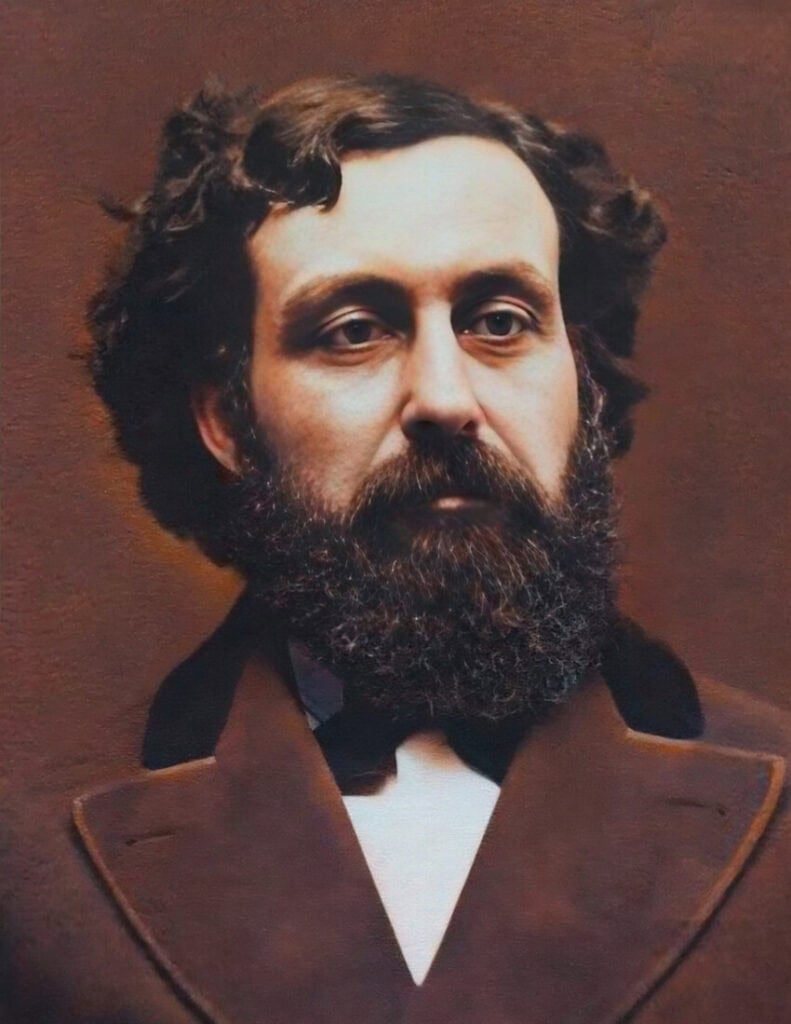
Philip Paul Bliss was born in Clearfield County, Pennsylvania, in 1838. Music grabbed hold of him early, and he pursued it with the kind of seriousness that turned a rural upbringing into a full-time gospel ministry. His gifts caught the attention of Dwight L. Moody, who urged Bliss to leave music teaching and devote himself entirely to evangelistic work. Bliss did exactly that. Partnering with Major D. W. Whittle, he traveled widely, wrote hymns at a remarkable pace, and became one of the best-known gospel musicians of his generation. “Hallelujah, What a Saviour!” and the beloved tune for “It Is Well with My Soul” both came from his pen. By the end of 1876, Bliss was only thirty-eight years old and at the height of his ministry.
Then, in a single night, everything changed.
In late December of 1876, Philip and his wife Lucy boarded a train for Chicago. As the train crossed the bridge over the Ashtabula River in Ohio, the bridge gave way. The cars plunged into an icy ravine and caught fire. Nearly one hundred people died. Philip and Lucy Bliss were among them. A story later circulated that Bliss escaped the wreckage but turned back into the flames to save his wife. It is a powerful account, though even Whittle expressed caution about verifying it. What is certain is this: the church lost one of its brightest voices that night.
But something survived. A trunk of Bliss’s papers had been sent ahead and made its way to Chicago. Inside was a manuscript of a hymn text he had completed but never set to music: ‘I Will Sing of My Redeemer.’ James McGranahan later composed a tune for it, and the hymn was published in 1877. It later became one of the early songs recorded by Thomas Edison.
Those lyrics have now outlived their author by nearly a century and a half. And they show no signs of slowing down.
Worshiphymns arranger Don Chapman, moved by the story of Bliss and by the strength of the text itself, has composed a brand new melody as part of his Hymns Reborn series. Titled “Sing of My Redeemer,” this setting was built for the gathered church. It is congregationally driven, shaped more by voices than by a worship band.
Call to Worship
Need help finding the right words to introduce a hymn? Use this sample “Call to Worship” as a starting point, or let it inspire you to create a heartfelt invitation to praise in your own words!
Option 1: The Story Behind the Song
In December of 1876, the popular hymn writer Philip Bliss died in a train disaster. He was thirty-eight years old and had spent his life writing songs that pointed people to Christ. Among his belongings, friends found lyrics to a hymn he had just finished but never had the chance to sing. Those lyrics declared, “I will sing of my Redeemer and His wondrous love to me.”
Bliss never stood before a congregation and heard these words lifted in worship. But we can. Today, we get to sing what he could not, carrying forward a message that survived fire and wreckage and nearly 150 years of history. As we raise our voices, let’s remember that the Christ who purchased our freedom on the cross is the same yesterday, today, and forever. He paid the debt. He sealed our pardon. And He made us free.
Option 2: The Cross and Our Freedom
We live in a world that talks a lot about freedom. Freedom to choose, freedom to speak, freedom to live as we please. But the deepest freedom any of us will ever know was purchased at the highest possible cost.
The hymn we are about to sing brings us back to that cost and that victory. “On the cross He sealed my pardon, paid the debt, and made me free.” These are not sentimental words. They are a declaration of what Christ accomplished for every person in this room. As we sing together, let these words move from our lips to our hearts. Let them remind us that our freedom was not cheap, and it was not an accident. It was love, deliberate and complete.
Lead with Confidence
Here is what makes “Sing of My Redeemer” such a valuable addition to your worship library: it is not tied to a single Sunday on the calendar. Yes, it carries the weight of the cross and the victory of the resurrection. But it is not limited to Easter morning. Think of it as an “afterglow” song, one that lets your congregation stay in the light of Easter for weeks after the holiday itself has passed. Spring, summer, ordinary Sundays that still need resurrection truth: this hymn fits all of them.
The arrangement is built on voices. This is a song for the gathered church, not the stage. Give your congregation room to breathe, to sing, to mean the words. And when you reach the bridge, let the voices carry it. That moment, “from death to life, His victory has brought me,” is where the proclamation hits hardest. Don’t rush it.
Consider sharing a piece of the Philip Bliss story before you sing. It does not need to be long. A congregation that knows these words were recovered after Bliss’s death and set to music by a grieving friend will hear them differently than a congregation that does not. That context turns a hymn into a witness.
Blending Suggestions
Living Hope by Phil Wickham and Brian Johnson: “Sing of My Redeemer” anchors the congregation at the cross, and “Living Hope” lifts them to the empty tomb. The progression feels natural. After finishing “Sing of My Redeemer” try tagging it, nearly acapella, with just the bridge: “from death to life, His victory has brought me.” Then flow directy into the opening verse of “Living Hope” to carry the congregation from sacrifice to resurrection without losing momentum.
How Deep the Father’s Love for Us by Stuart Townend: Both songs fix the congregation’s eyes on the cross and the cost of redemption. Where Bliss writes, “with His blood He purchased me,” Townend asks the congregation to consider the depth of that love. Pair these two for a reflective, cross-centered moment in your set. Let the weight of both songs do its work without rushing toward something upbeat.
Death Was Arrested by North Point Worship: The hymn declares, “paid the debt, and made me free.” “Death Was Arrested” picks up right where that line lands, celebrating the moment when death lost its grip. Use “Sing of My Redeemer” to set up the story, then let “Death Was Arrested” be the congregation’s response of praise. The energy shift from hymn to anthem can be a powerful moment in your set.
By weaving “Sing of My Redeemer” with these contemporary songs, you will create a worship experience that moves from the sorrow of the cross to the joy of victory. Philip Bliss never heard his hymn sung. But every time your congregation lifts these words, they carry forward a Christ-centered message that has been traveling from voice to voice for nearly 150 years.