Let’s say you get three hymn requests in a single month. One comes from the pastor. One comes from an elder’s wife. One comes through the church’s online suggestion form.
None of them are mean (well, some of them are mean!) None of them are even unreasonable. But somehow every one of them feels like a performance review you didn’t ask for.
There are real reasons hymn requests feel personal. Let’s name them honestly, because that’s the first step to handling them well.
Why Hymn Requests Sound Like Criticism to Worship Leaders
Hymn requests don’t always arrive as simple song suggestions. They often arrive as opinions about your leadership, your theology, and your competence, even when the person means well.
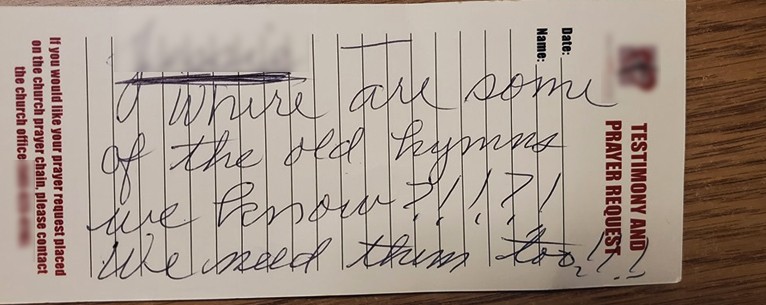
The request might say “Can we sing more hymns?” But what lands in your ears is one (or all) of these:
- “We never sing hymns anymore.”
- “The old songs had more theology.”
- “Nobody knows these new songs.”
- “The music today is all performance.”
Those comments hurt because most modern worship leaders are working really hard to serve their church. You’re not up there showing off. You’re planning, rehearsing, and praying over song choices. So when a request seems to imply your worship is shallow, it stings. Of course it does.
I remember one time I got a complaint that WE NEVER SING HYMNS and I happily pointed out that we did, indeed, sing one LAST SUNDAY. The complainer huffed and puffed, then admited they didn’t make it to church last Sunday. Oh well. At some point I realized I’d get complaints regardless, even if I could prove they weren’t even valid, so complaints ended up losing their power.
The Pressure Modern Worship Leaders Already Carry
Here’s what the person requesting a hymn almost never sees: your job is already a pressure cooker before they ever open their mouth.
Every week you’re keeping the set current, choosing songs the congregation can actually sing, matching the sermon theme, and working with volunteers of wildly different skill levels. You’re navigating keys, click tracks, pads, and arrangements. You’re trying to introduce new songs without overwhelming people. And you’re doing all of it (probably paid part time or volunteering) while trying to keep the pastor happy, the older members served, and the younger families engaged.
That is a LOT of plates spinning at once. So when someone says, “You know what you should add to all of that? A hymn,” it doesn’t feel like a helpful idea. It feels like one more thing on a list that was already impossible!
Why Hymns Feel Musically Impractical in Contemporary Worship
There’s a layer underneath all of this that has nothing to do with attitude. It’s purely practical.
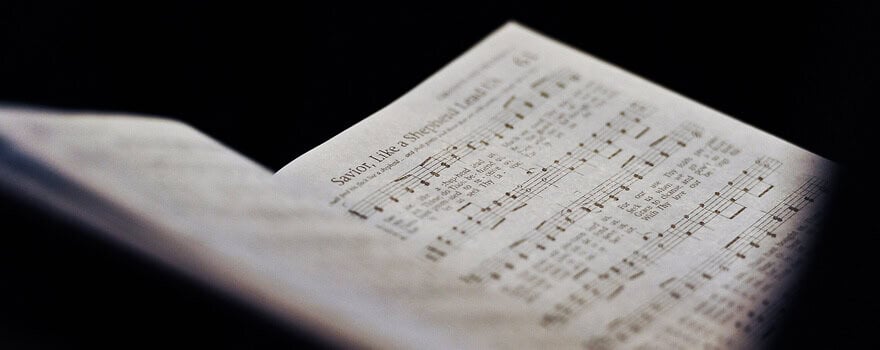
Most, if not all traditional hymns are genuinely hard to pull off with a modern band. Picture a typical hymnal page. Dense piano harmonies… chord changes on every beat. Keys chosen for pipe organ or four-part choir. No intro, no turnaround, no dynamic build. Melodic phrasing that feels stiff the second you put a kick drum under it.
If you’ve ever handed your guitar player a hymnal page and said “just follow along,” you know how that turns out. Not great!
This is one of the biggest reasons worship leaders quietly steer around hymns. It isn’t that they think the songs are bad. It’s that they tried to make a 19th-century piano arrangement work with two guitars, a cajon, and zero rehearsal time.
Worship Leader Resistance Isn’t Rebellion, It’s Experience
Sometimes a worship leader’s hesitation toward hymns isn’t a lack of reverence (though I’m on enough worship leader Facebook forums to know that sometimes it IS!) It’s the memory of a hymn that crashed and burned because nobody had a workable arrangement, the key was wrong, and it just didn’t fit in the set.
That experience doesn’t make you anti-hymn. It makes you cautious. And caution is not the same thing as resistance.
How Hymn Requests Can Become Pastoral Collaboration
Here’s some good news that might reframe how you hear these requests.
The whole “worship wars” narrative is more overblown than most of us assume. A LifeWay study found that only about 15% of Protestant pastors said music preferences were their biggest music-related challenge. Meanwhile, 92% reported mutual respect with their worship leader, and 71% said they collaborated a lot on worship planning.
In most churches, hymn requests don’t have to become a war. They can become a conversation.
A survey of more than 400 worship leaders found that song selection is genuinely complex, shaped by peer recommendations, leader input, and personal experience, not just by what’s trending on CCLI. So when your pastor or a longtime member asks for a hymn, that request might actually be a legitimate part of how your church discerns what to sing. It doesn’t have to be an attack on your vision. It might be your congregation telling you something worth hearing.
What to Do With the Way Hymn Requests Make You Feel
So where does this leave you?
If you feel frustrated or defensive every time hymns come up, that’s valid. The pressure is real, and when the criticism comes wrapped in a complaint, it can be genuinely unfair. But don’t let that feeling have the final say.
Because here’s what I’ve learned after years in this worship world. The problem with hymns in modern worship has almost never been the hymns themselves. It’s been bad arrangements, wrong keys, clumsy placement, and no practical plan for making them work. Every one of those is a solvable problem.
That’s actually why I’ve spent more than 20 years arranging hymns for worship. I needed to solve this exact problem in my own church, with my own band, on my own Sunday mornings. I wanted hymns that kept their theological weight and familiar melodies but still felt natural for a modern team to play. And my hope is that the work I’ve done can help solve the same problem in your church, too!
A request for an old hymn is not always a complaint about you. Sometimes it’s the congregation asking to remember together. And a worship leader who can hear it that way is in a far better spot to lead well.
Bottom Line: A hymn request is rarely a personal attack, even when it feels like one. More often it’s your congregation asking to be heard, and hearing them doesn’t make you less of a modern worship leader. It makes you a better one.

Don Chapman is an arranger, composer and worship leader with over 20 years of experience creating resources for the local church. He created Worshiphymns.com to give worship leaders fresh, contemporary arrangements that make it easy to weave classic hymns into modern worship sets.